Tri-State Area Cannabis Delivery: A Guide to Risk & Insurance
Launching a cannabis delivery service in the tri-state area offers massive opportunities, but it also means navigating a complex landscape of strict state regulations and high-stakes urban risks. From choosing between a company-owned fleet and third-party logistics to managing mandatory vehicle security upgrades, standard business insurance simply won’t cut it. This guide breaks down the essential coverage you need to close dangerous liability gaps and keep your delivery operations fully compliant and protected.
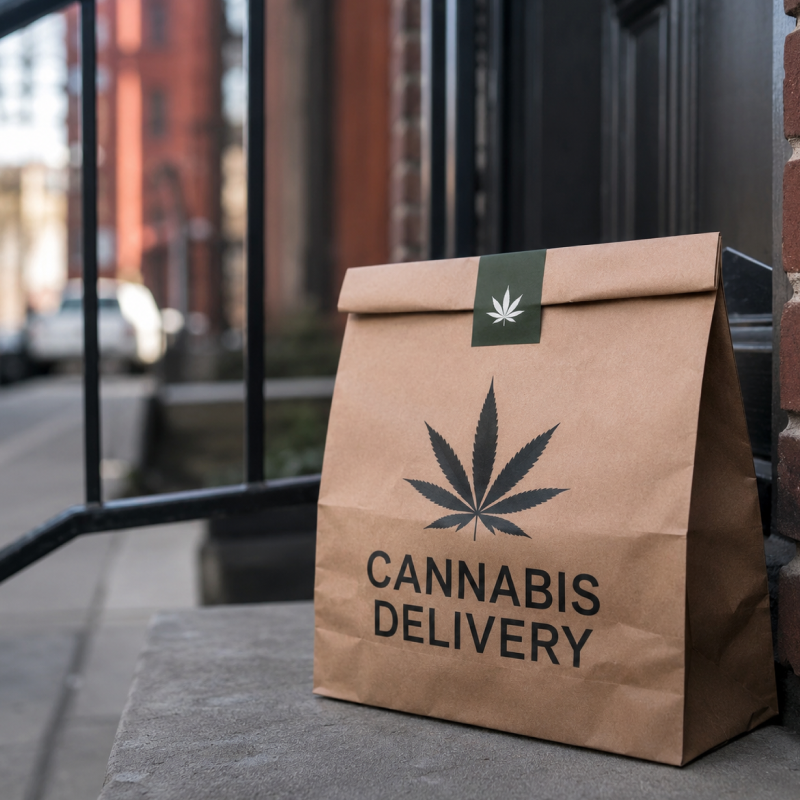
As cannabis businesses within New York, New Jersey, and Connecticut continue to grow, insurance needs expand—and your coverage needs to grow with it. Whether you are running a fleet of branded vans or outsourcing to a third party, your liability doesn’t end when a package leaves the warehouse. If you have delivery services of any kind, you need your insurance coverage to follow those vehicles down the road and all the way to their destination.
“Standard” business insurance often leaves massive gaps in delivery operations; tri-state area cannabis delivery operators need customized delivery insurance from industry experts.
Deciding Your Model: In-House vs. Third-Party
Choosing between an in-house fleet and a third-party vendor is about balancing operational control against corporate risk. Both delivery models offer clear advantages for cannabis companies, but each comes with its own set of critical insurance traps if you aren’t careful.
Option A: The In-House Fleet
Full risk, full control. The advantage of having an in-house delivery fleet is the amount of control you have over the services. An in-house delivery fleet allows you to provide a consistent brand experience and maintain direct oversight of the safety protocols for the vehicles and drivers.
But full control comes with increased risk. To have a successful in-house fleet, you must have entirely company-owned commercial vehicles. Anything other than this is a recipe for a denied insurance claim. Having employees use their personal cars with a “delivery add-on” for insurance is a one-way ticket to getting your claim denied in the case of an accident.
Option B: Third-Party Delivery Services
When you contract out delivery services to a third-party vendor, you transfer the burden of risk and reduce the amount of up-front capital needed to start a delivery service, which also typically allows businesses to scale faster.
However, this option does not remove the liability from your company entirely; a brand can still be sued for the actions of a third-party driver, a vicious liability trap. Additionally, many national delivery giants like Uber and DoorDash still refuse to service cannabis companies because of federal banking restrictions and DOT rules.
But as in an industry, when a gap is identified, services rise to fill it. There is an emergence of cannabis-specific localized providers who exist solely to serve the delivery needs of cannabis businesses. If you choose to partner with one of these services, you need to conduct an in-depth analysis of the unique insurance coverage needed on both sides of the agreement.
The Foundation: Essential Insurance Coverages
Building an umbrella of insurance coverage looks slightly different for tri-state area cannabis delivery businesses across New York, New Jersey, and Connecticut, as auto insurance requirements and limits are different. But there is a strong foundation of insurance policies every tri-state cannabis delivery business should have.
Commercial Auto Insurance
Cannabis businesses need more than the legal minimum for commercial auto liability insurance. Businesses with size and volume of delivery need at least $1 million in coverage, as well as specific additional coverage for physical damage and third-party bodily injury.
In high-density areas around New York City, accidents are less of a question of “if” and more of a question of “when.” Your insurance coverage needs to provide a safety net if your employees are hit, or worse, if they cause an accident.
Hired & Non-Owned Auto (HNOA)
If your business is using vehicles it doesn’t own to perform company operations, you need HNOA coverage. If your employees are using their personal vehicles, or you’re renting vehicles from somewhere, HNOA is vital coverage to ensure you have a safety net if accidents happen. HNOA coverage applies to rented, leased, or borrowed vehicles, including those owned by employees.
Workers’ Compensation
Workers’ Compensation may be mandatory across the tri-state area, but it also provides a vital safety net for the most valuable asset in any business—your employees. Workers’ Comp steps in after accidents or repetitive motion injuries to ensure your employees get the medical treatment they deserve, without breaking your bottom line.
NY, NJ, and CT all differ in rate structure and the classification code used for delivery drivers, which means you need a cannabis industry expert to help you craft the right umbrella of insurance, especially if you’re operating in multiple states.
General Liability & Excess or Umbrella
Your general liability risk doesn’t end when employees leave your property. If they’re out on a delivery and injure themselves on a patch of ice, your company is still liable for it. The Excess or Umbrella policies around General Liability policies extend your coverage differently.
An Excess liability policy sits directly on top of your General Liability policy to strictly increase its financial limits, operating on the exact same terms and conditions as the underlying coverage. An Umbrella liability policy also raises those financial limits, but it can span across multiple underlying policies at once (like General Liability, Commercial Auto, and Employers’ Liability) and may even fill in gaps by covering risks the primary policies exclude.
Managing the Complexities of the Tri-State Area
The tri-state cannabis market offers massive opportunities, but its delivery landscape is a minefield of unique regulatory and operational hurdles. Successfully managing risk in this region requires operators to balance strict state mandates against the daily realities of metropolitan theft, traffic, and litigation.
Regulatory Compliance: The Commercial-Owned Mandate
Cannabis licensees in NY and NJ are typically required to provide the state with the make, model, and VIN of vehicles under their direct control, which means owned, on a loan, or leased. Using vehicles that are not registered with the state can be a breach of the conditions of insurance policies, which can void coverage in the event of an accident.
The Death of the “Gig” Model
In the tri-state area, particularly in New York and New Jersey, cannabis regulatory bodies require specific security modifications for vehicles transporting cannabis products or cash associated with cannabis. Requirements of bolted-down, locked cages to store product in and continuous GPS tracking are rarely available with personal vehicles, as used in services like Uber. This means that businesses must invest, not only in a commercial fleet of vehicles but also in specific modifications to keep them compliant.
Insurance Reality Check
Gig-style delivery services for cannabis run into another issue. Many personal auto insurance policies have specific exclusions for “livery” or “business use” that will be flagged in a cannabis-related claim. If your driver isn’t covered under their own insurance (and many aren’t), your business is on the hook for the cost of damages, and/or medical expenses for one or both parties.
Urban Risk Factors
Operating a delivery fleet in the densely populated tri-state area introduces distinct environmental hazards that directly impact your insurance rates and security protocols.
- Frequency vs. Severity: When you operate in the tri-state, your risk isn’t centered on a total loss of the vehicle; it’s the high frequency of “fender benders” in dense traffic, which can lead to skyrocketing premiums. Small accidents here and there can raise rates over time because they increase the frequency of claims filed.
- Theft & Diversion: Unfortunately, vehicles bearing cannabis brands can quickly become targets for theft, for people looking for a quick take of cash or high-value products. While most areas in the tri-state area require commercial plates for company or fleet vehicles, brands must balance this with enough branding to be recognizable, with the stealth of unmarked vehicles.
Data & Telematics
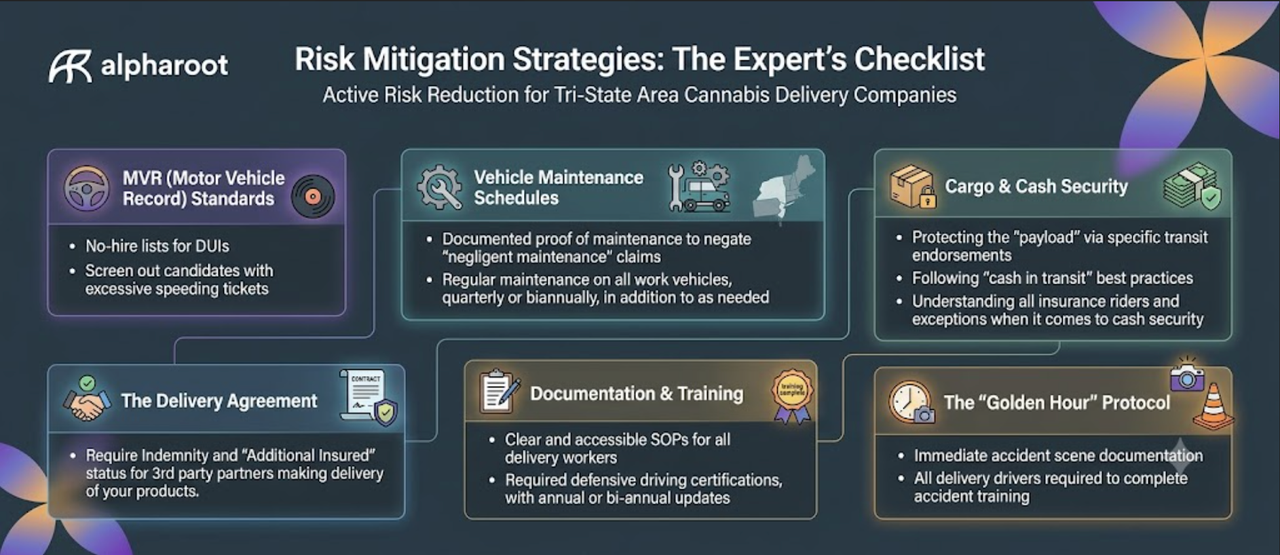
In addition to GPS tracking being a state requirement throughout the tri-state area, GPS data can also prove useful after an accident. In a litigious area like NYC, having hard proof of the speed your driver was going when an accident occurred can provide defense in court and against potentially predatory lawsuits. But the only way to be sure of this data is to use hardwired GPS trackers in registered company vehicles.
Finding the Balance
Cannabis delivery is a growth engine for businesses within the tri-state area, but without the right insurance coverage, one small accident can turn and wipe out a year’s worth of margin. Risk management for cannabis delivery services isn’t about avoiding the road—it’s about being the most prepared person (or company) on it.
The right insurance coverage protects your business, but the right partner helps you understand your evolving needs. Protecting your cannabis company can seem confusing; however, we’re a full-service insurance brokerage working with carriers worldwide to offer you the best coverage possible. We’re here to help! Please reach out to us today by email info@alpharoot.com or calling 646-854-1093 for a customized letter or learning more about your cannabis insurance options.