Cannabis Drought Risk Management in the 2026 National Drought
As a historic drought grips over 58% of the country, cannabis cultivators face an unprecedented existential threat. Unlike traditional farmers who can easily rotate crops, cannabis operators are locked into a single, water-intensive plant. From regulatory shutdowns in California to smoke-tainted crops in Colorado, this comprehensive guide breaks down the unique regional risks facing the industry and outlines the critical, water-saving infrastructure upgrades and diversification strategies growers must adopt to survive 2026.
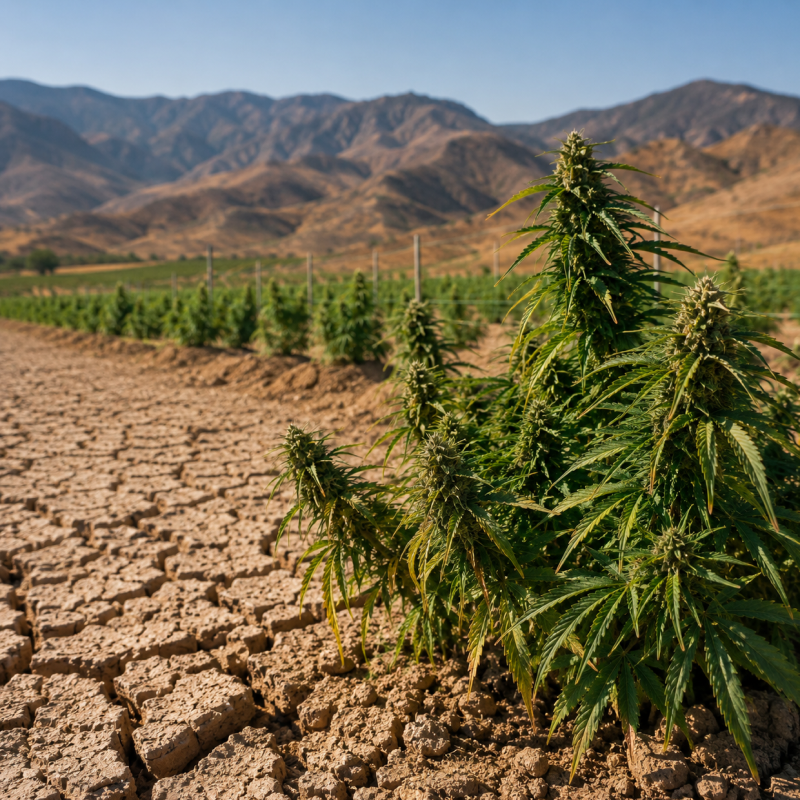
The United States is in a drought. As of April 2026, 58% of the lower 48 states were classified as being in a moderate drought or worse (categories D1–D4), a condition that severely impacts the cannabis industry. Droughts affect all farmers, but cannabis cultivators face a unique risk; they are locked into one crop.
While other farmers can diversify and rotate between crops like soy and corn, cannabis operators cannot pivot to drought-tolerant crops. Massive infrastructure investments, rigid state licensing, and the high-cap nature of the cannabis plant mean that operators are locked in with cannabis from planting to harvesting.
As droughts become more common, survival of cannabis operators won’t just be about access to water; it’s about strategic hedging and proactive cannabis drought risk management for operations moving forward.
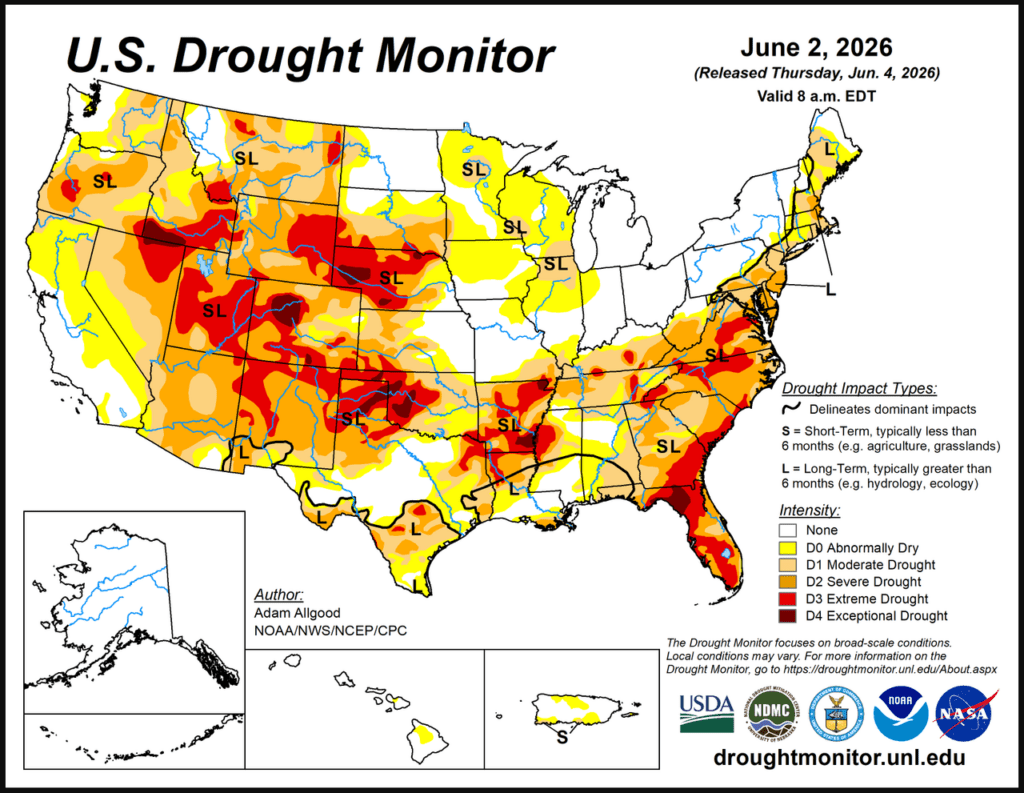
Source: US Drought Monitor
The State of the Union: 5 Regions, 5 Risks
While drought is a risk for operators across the country, it affects markets and growing climates differently.
California: The Regulatory Squeeze
Drought has been an ongoing concern for California farmers across all crops for years. In an attempt to manage existing water resources, the State Water Resources Control Board can step in and issue “cease to divert” orders to businesses they feel are in violation of water rights requirements.
As cannabis is a water-intensive crop, in severe drought years, companies are at risk of receiving these orders and being forced to shut down operations or let plants wither and die on the stalk. Strict water limits will also limit the number of new licenses or renewals the state can offer to cannabis operators.
Colorado: The Wildfire Catalyst
Colorado experienced a record low snowpack this year, which increases the risk of fire season, in length and intensity. Combined with rising seasonal temperatures, the state as a whole must brace for devastating fire seasons this year and in years to come.
Higher risks of wildfire put cannabis operations at risk; physical locations are at risk of damage or destruction, and crops themselves can be burned. But even if a cannabis crop manages to survive a nearby wildfire, high levels of smoke in the air can taint the crop, ruining the smell, flavor, and appearance of the buds. Smoke contamination is not typically tested for, but presents an increasing risk to Colorado cannabis companies.
Illinois: The “Flash Drought” Trap
States like Illinois, with high levels of snow and rainfall, are usually not considered in the drought conversation. But flash droughts present a major risk that comes on quickly. When lower-than-average rainfall or snowfall is followed by abnormally high temperatures and winds, a state can transition from “water-rich” to “abnormally dry” shockingly quickly, sometimes in under a month, a situation Illinois is currently experiencing.
There isn’t much farmers can do in the midst of a flash drought, except prepare beforehand. Using companion crops like clovers can help maintain soil microbiology and moisture during heat spikes.
Michigan: The Moisture Retention Challenge
Michigan and other states around the Great Lakes often face unpredictable weather and precipitation. Water is not necessarily an issue, but retaining it in the soil is. When the weather swings from mild and wet to hot and dry, soil dries out quickly. Cultivators, both indoors and outdoors, will need to use tools like living mulch and alfalfa cover to help reduce evaporation from the soil and protect precious root zones from drying out.
New York: The Long-Term Soil Struggle
While water-rich New York is not often considered in the drought conversation, the state still has potential water-related risks that operators must plan for. The market in New York is still growing, and core structures like cultivation are still in build mode.
The state has rivers and lakes aplenty, but historically, water storage has been a challenge. As the market continues to develop in a drought-prone world, cultivators will have to address problems with dry soil and retaining water, while also battling flash flooding. All of this means cultivators are likely to face higher insurance premiums to properly insure crops and property.
Deep Dive: The Diversification Dilemma & A Tale of Two Farmers
A farmer in Illinois plans his years—and his profit—on the diversification of crops. In addition to beef cattle, he rotates between hay, corn, and beans. When one crop has an off year, he leans more heavily on his other channels. If the weather is too extreme for corn and beans, he leans on hay and alfalfa, two more drought-tolerant crops. This strategy of diversification serves him well, but also requires foresight and proactive risk management.
A cannabis cultivator in the same state cannot do the same thing. When cannabis plants are suffering because of low water levels, cannabis operators have no fallback or diversification plan, leaving them dangerously exposed.
So how can operators plan for, and take advantage of, diversification in their cannabis drought risk management?
Forward-thinking operators take a two-pronged approach: hedging bets on growing indoors vs. outdoors, and increasing insurance coverage.
The biggest impact drought will have on operators across all states is on outdoor grows, where blazing temperatures and blowing winds cannot be controlled. Even with established watering lines, outdoor grows face higher risks of crop failure.
To mitigate this risk, cannabis operators could split growing operations between an outdoor grow site and an indoor facility. Climate-controlled indoor operations are heavier on utilities, but also offer a more balanced approach. Mixed-method growing is diversification for cannabis operators.
Additionally, crop insurance policies offer protection for years when outdoor (or indoor) crops fail. This policy is a financial safety net for cannabis companies against unexpected crop loss from “natural disasters, pests, and other risks.”
Budgeting for Resilience: 2026 Infrastructure Trends
Planning ahead for droughts or other harsh weather conditions requires an honest look at the systems and infrastructure currently in place.
HVAC Evolution
HVAC systems can help or hurt a grow operation, depending on their efficiency. If your operations are relying on old, outdated, or inefficient systems, your business is not equipped to deal with severe weather changes.
What would it cost to upgrade your HVAC systems to the most energy-efficient versions possible? While this is a costly investment, many electrical companies offer discounts or interest-free incentives to upgrade to high-efficiency SEER2 systems. If you can’t afford a full upgrade, consider retrofitting your systems where possible.
Water-Saving Tech
Being smart with water starts before a drought hits. Your water system can be a make-or-break piece of operations for cannabis cultivators. If you don’t have water-saving technology in place already, now is the time to explore automated drip irrigation, moisture sensors, and closed-loop reclamation systems to save water and money.
The Cost of Inaction
The state of your operational systems and technology plays an important role in your insurance coverage. Brokers favor companies with high-efficiency systems, updated technology, and a proactive approach to potential risks. Companies that rely on outdated or inefficient systems may face higher premiums, as they’re considered larger risks. In worst-case scenarios, companies with outdated systems may be considered fully uninsurable.
Moving from Vulnerable to Verifiable
This drought is not a passing phase. It will be an ongoing challenge for cultivators throughout 2026, and a risk in years to come as weather patterns become more severe and unpredictable. Like many of the challenges facing cannabis operators, the risk of drought is not insurmountable, but it does require strategic thinking, careful risk management, and a comprehensive umbrella of insurance.
You can’t control the rain—or the lack of it—but you can plan for both extremes. Focus on where you have control: in your planning, infrastructure, risk management, and facility operations.
Protecting your cannabis company can seem confusing; however, we’re a full-service insurance brokerage working with carriers worldwide to offer you the best coverage possible. We’re here to help! Please reach out to us today by email info@alpharoot.com or calling 646-854-1093 for a customized letter or learning more about your cannabis insurance options.